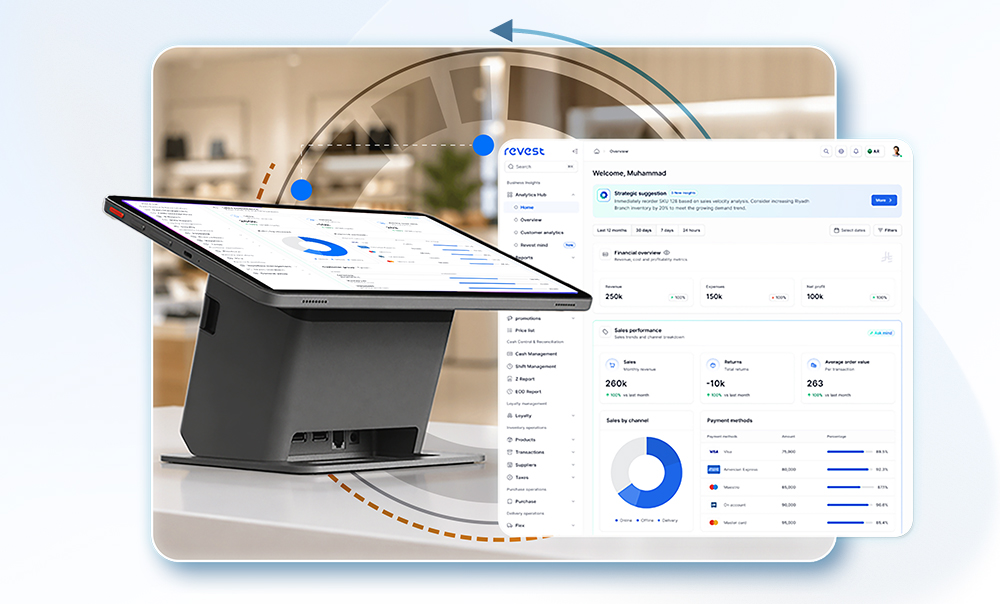
Today, retail technology is moving faster than ever, and stock is where its impact shows first. A modern inventory management system no longer just counts units. It reads sales as they happen, spots what has stopped selling and helps retailers decide what to move, promote or stop buying before value is lost.
Yet many retailers still find their cash locked in products that sit on shelves and in warehouses for months. Each store sees its own numbers, purchasing works from last month's reports, and dead stock builds up quietly until the year-end count reveals the bill.
In today's guide, we dig deep into what tied-up capital really costs a retail business, why disconnected systems make it worse, and the practical steps that turn slow-moving stock back into working cash across every store.
What Tied-Up Capital Really Costs Your Business
Dead stock is inventory that has stopped selling, or sells so slowly that it no longer earns its place. On paper it still counts as an asset. In practice, it drains the business in several ways at once.
Here's where the cost shows up, often long before anyone writes the stock off:
Storage space: shelves and warehouse space that could hold fast sellers are taken up by products nobody is buying.
Staff time: every unit still has to be counted, tracked, moved and reconciled, store by store.
Falling value: fashion goes out of season, electronics are replaced by newer models, and perishables approach their expiry dates.
Missed sales: cash locked in slow products can't fund the items customers are actually asking for.
The scale is bigger than most retailers expect. IHL Group estimates that retailers worldwide lose $1.73 trillion a year to out-of-stocks and overstocks combined, and McKinsey found that US retailers alone were sitting on $740 billion in unsold goods. Dead stock and stockouts are two sides of the same problem: the right product isn't in the right store at the right time.
Connect Your Data and See Every Unit Across the Network
Dead stock usually starts with fragmented data. When the warehouse, the stores and the online channel each run on separate systems, nobody has a complete picture. Managers spend days reconciling spreadsheets, and buyers reorder items that are already sitting unsold in another location.
A unified inventory management system solves this at the root. Sales, stock movements and purchases flow into one central database in real time, so head office gets a real-time view of stock in every warehouse and store. Retailers who have followed how inventory management has changed in the digital era know the difference this makes: decisions move from monthly guesswork to what is selling today.
One shared source of truth also changes how teams work together. Finance, buying and store operations see the same numbers, which is why one source of data leads to sharper decisions across the whole business.
Turn Inventory Data into Early Action
Traditional stock reports arrive at the end of the month. By then, a product that started slowing down weeks ago has lost more value, and the best window to act has closed.
This is where AI changes the timeline. Revest's built-in AI watches sales and stock continuously, flags slow-moving stock and suggests where to send it, and forecasts demand at the product and store level. Managers get a signal while there is still time to act, with a recommended next step attached: move the stock to a store where it sells, include it in a targeted promotion, or hold back the next order.
The same visibility works in the other direction too. Revest tracks lost sales, the items customers asked for that weren't in stock, so buyers can see what to put money into as well as what to stop buying. It's the same discipline that helps retailers keep bestsellers on the shelf.
Three Practical Ways to Clear Dead Stock and Release Cash
Once the data is connected, the fixes become practical and measurable. These three moves mirror how the strongest retail chains manage stock across a network, and each one returns cash to the business instead of writing it off.
Balance Stock Between Your Stores
A product that sits untouched in one store is often selling out in another. Instead of placing a new supplier order, a store-to-store transfer moves the surplus to where demand is. With Revest, transfers follow a clear cycle of request, approval, shipping and receipt, so every unit stays accounted for, and sales staff can see stock in nearby stores when a customer asks for an item that's out on their shelf. The result is fewer purchase orders, less dead stock and more sales from inventory you already own.
Manage Expiry Dates with FEFO
For grocery, pharmacy and beauty retailers, time is the enemy. An inventory management system that tracks batches and expiry dates lets you run first-expired, first-out (FEFO), so the oldest stock sells first. Revest checks FEFO stock at checkout and reports on near-expiry and lost sales, which gives marketing teams time to build promotions around products before they reach the waste bin.
Buy Based on What Actually Sells
Much dead stock is created at the purchasing stage, when buyers order extra "just in case". Linking point of sale data to purchasing replaces that defensive overstocking with real sales velocity. Revest's AI prompts a reorder when sales data shows an item is running low, and Revest syncs both ways with SAP, Microsoft Dynamics and Odoo, so purchasing in your ERP works from the same live numbers as your stores.
Build Operational Excellence Across Your Store Network
Controlling stock across dozens of stores isn't possible with manual counts and end-of-month spreadsheets. Enterprise retailers that consistently keep inventory lean have moved to digital infrastructure that gives them speed and accuracy at every level, from the stockroom to the boardroom.
That means automating the routine work, such as transfers, adjustments and approvals, and giving managers one central dashboard where store activity turns into decisions. Retailers who start automating the workflows behind every store free their teams to focus on selling, and they catch problems while they're still small.
How a Unified Inventory Management System Protects Your Cash Flow
The real payoff comes when every channel feeds the same view. When store sales, online orders and warehouse movements sit in one inventory management system, decisions are based on actual stock velocity, not on assumptions or last season's habits.
For retailers running a network of stores from one back office, this is what keeps capital moving. Stock goes where it sells, buyers spend on what customers want, and cash that was locked in slow products flows back into growth: new collections, new stores and new channels.
Ready to Turn Slow Stock Back into Working Capital?
Now that we've gone through what dead stock really costs and how to clear it, the next step is choosing the system that makes these habits stick. The right inventory management system brings every store, warehouse and channel into one live view, flags slow movers while there is still time to act, and lets you balance stock between locations before you spend on new orders. It turns purchasing into a decision based on real demand rather than caution, and it gives finance and operations the same numbers to work from.
This is the work we do every day. As a leading retail platform in Saudi Arabia and the GCC, we power enterprise retailers and more than 250 SMEs across 10 countries on over 1,200 POS terminals. If you'd like to see where your own cash is sitting, book a walkthrough built around your own stock data and we'll show you what moving it looks like.
FAQ
What is an inventory management system, and how does it reduce dead stock?
An inventory management system tracks stock quantity and value across every store, warehouse and online channel in real time. It reduces dead stock by showing which products have stopped selling, where surplus sits, and what to transfer, promote or stop reordering. Revest adds AI on top, so slow movers are flagged early with a recommended next step.
How do I identify dead stock before it loses value?
Watch sell-through by product and by store, alongside total stock. Items whose sales are slowing while stock stays flat are the early warning sign. Revest's AI monitors this continuously and flags slow-moving stock on the dashboard, instead of waiting for a month-end report.
Can Revest move stock between stores instead of reordering?
Yes. Revest manages store-to-store transfers from request and approval through shipping and receipt, and its AI recommends moving stock from stores with surplus to stores running low. Sales staff can also check availability in nearby stores straight from the point of sale.
Does Revest track batches and expiry dates?
Yes. Revest supports batch and expiry date tracking, applies first-expired, first-out (FEFO) at checkout, and reports on near-expiry stock, which helps grocery, pharmacy and beauty retailers reduce waste.
Does Revest work with my ERP for purchasing?
Yes. Revest integrates two ways with SAP, Microsoft Dynamics and Odoo, so sales and stock data flow into your ERP without re-keying and purchasing decisions are based on live store data.
Is a unified inventory management system right for enterprise retail chains?
It's where it makes the biggest difference. The more stores, warehouses and channels a retailer runs, the more cash can hide in the gaps between them. Revest runs multiple stores, entities and warehouses from one back office, with one live view of stock across the network.